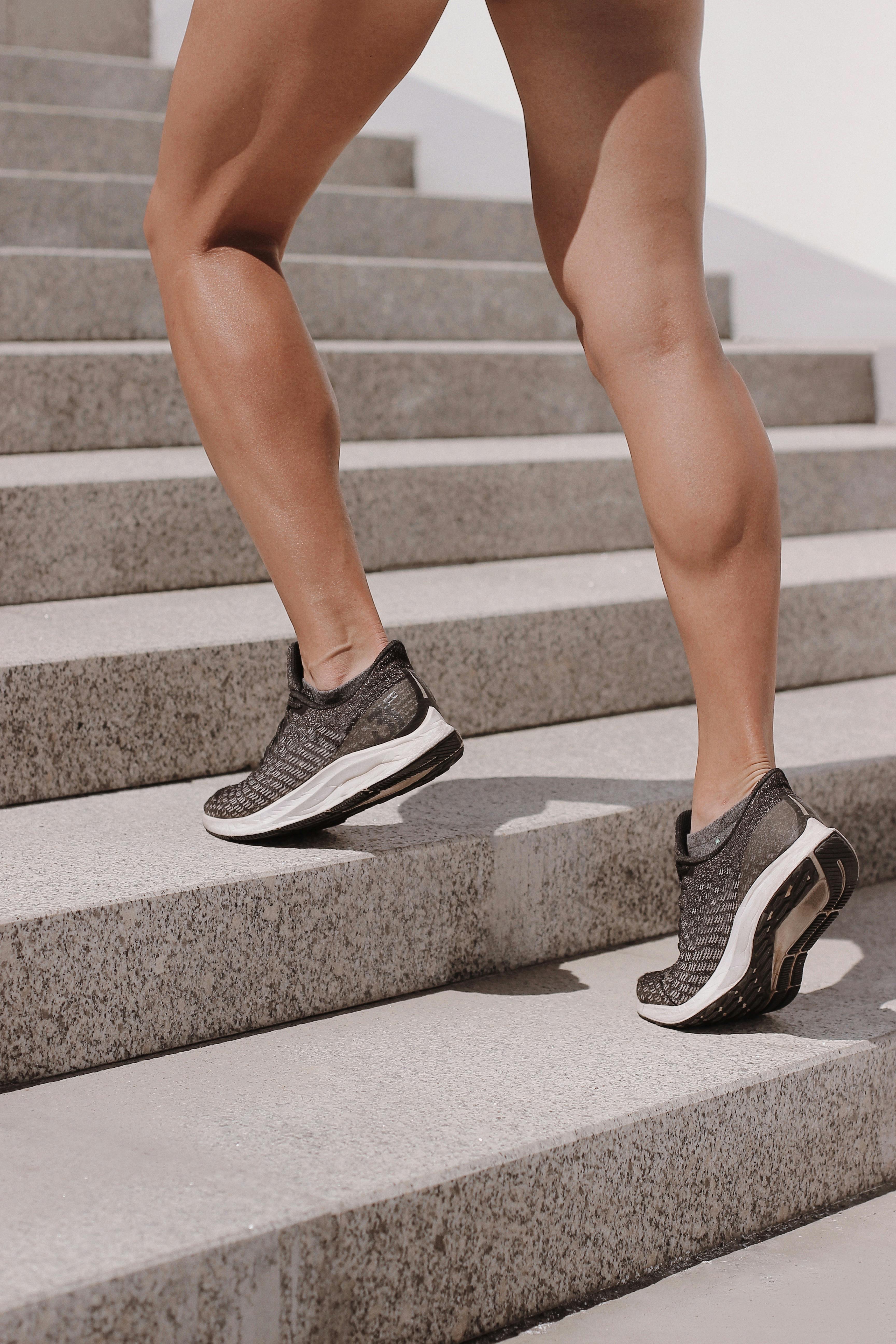
Why Your Calves Get Sore When You Run (and How to Fix It for Good)
If your calves feel like they’re made of concrete after a run, you’re not alone. Calf soreness is one of the most common running complaints — and it almost always comes down to form. The good news? It’s fixable. By adjusting a few key mechanics, you can protect your calves, improve efficiency, and run pain-free.
What Your Calves Actually Do When You Run
Your calves are the engine room of your stride. Two main muscles — the gastrocnemius (upper calf) and soleus (deeper calf) — handle three critical jobs every step:
- Shock absorption: When your foot lands, the calves help absorb impact.
- Stabilization: They steady your ankle and keep your balance.
- Propulsion: They push you off the ground for your next stride.
If any part of your running form shifts extra work onto the calves, you’ll feel it fast.
Top Reasons Your Calves Hurt After Running
1. Over-Striding (Landing Too Far in Front)
When your foot lands in front of your body, your calf and Achilles absorb too much impact.
Fix: Land with your foot roughly under your hips. Think “quiet feet” — shorter, quicker strides.
2. Low Cadence (<165 Steps/Min)
Fewer steps per minute mean longer time on the ground and higher calf load.
Fix: Aim for 170–185 steps per minute. Run to a steady rhythm or imagine tapping your feet lightly and fast.
3. Excessive Forefoot Striking
Landing too far on your toes keeps your calves under constant tension.
Fix: Aim for a midfoot landing, where your heel and ball of foot share the impact.
4. Tight Ankles or Weak Glutes
When your ankles can’t flex properly, your calves overwork to make up for it. Weak glutes mean poor hip stability — again, more calf strain.
Fix: Add ankle mobility drills and glute activation (see below).
5. Too-Fast Increases in Volume or Speed
Your muscles need time to adapt. Jumping from 10 km a week to 30 km or adding sprints overnight = recipe for soreness.
Fix: Increase total mileage by no more than 10% per week and build intensity gradually.
The Perfect Running Form to Protect Your Calves

Here’s what good form looks like:
- Slight forward lean from your ankles (5–10°) — never bend at the waist.
- Midfoot strike under hips — reduces braking forces.
- Cadence 170–190 spm — smoother, lighter rhythm.
- Minimal vertical bounce (<10 cm) — saves energy.
- Relaxed ankles and arms — efficient, natural motion.
If your calves hurt, odds are one of these elements is off.
3 Drills to Build Calf-Friendly Running Form
1. Ankle Mobility Wall Stretch
How: Stand facing a wall, one foot back, and bend your front knee toward the wall without lifting your heel.
Why: Improves ankle flexion and reduces calf strain when landing.
2. Calf Raise to Single-Leg Balance
How: Stand on one leg, rise up onto your toes, then slowly lower. Hold 2 seconds at the top, 2 seconds down.
Why: Builds strength and endurance in your soleus and improves balance.
3. A-Skips
How: Skip forward lifting one knee high, landing softly on the midfoot, alternating sides rhythmically.
Why: Trains quick turnover and proper midfoot strike.
Strength Routine (2× Per Week)
Use this short routine to keep your calves strong and balanced:
- Seated Calf Raises — 3×15: Strengthens deep soleus muscle for endurance.
- Eccentric Heel Drops — 3×10: Stand on a step, raise both heels, then slowly lower one heel below the step edge. Builds Achilles resilience.
- Glute Bridges — 3×12: Lie on your back, lift hips, squeeze glutes. Improves hip extension and offloads calves.
- Side Planks — 30s/side: Stabilizes core and hips for balanced stride mechanics.
When to Worry
Mild calf tightness is normal after hard runs or new workouts.
But stop running and rest if:
- Pain lasts more than a week.
- It’s sharp or localized (not general soreness).
- There’s swelling or bruising.
This guide isn’t medical advice — it’s performance education. Persistent pain means it’s time to see a physio or sports medicine professional.
The Takeaway
Calf soreness is feedback, not failure. It’s your body telling you your form needs a tune-up.
The fix isn’t just stretching — it’s smarter movement.
Dial in your form, strengthen key muscles, and your calves will thank you on every run.
Want to see exactly what’s happening in your stride?
Upload your running video at PerfectRunningForm.com — we’ll analyze your form and build a free 8-week personalized plan to help you run stronger, faster, and pain-free.