How to Run Faster Without Getting Tired: 8 Proven Tips
You lace up, start strong… and two minutes later you’re gasping like you’ve sprinted a marathon.
Sound familiar? The good news: running faster without feeling wrecked isn’t about having superhuman lungs — it’s about technique, pacing, and training smart.
Here’s how to boost your speed and keep your energy for the whole run.

🏁 Quick Takeaways (TL;DR)
- Pace smarter: start slow, finish strong.
- Build endurance gradually with intervals and long runs.
- Run efficiently: good form saves energy.
- Fuel and recover properly — hydration, carbs, and sleep matter as much as workouts.
1. Master Your Breathing 🫁
What to do: Try rhythmic breathing — inhale for 3 steps, exhale for 2. Keep your shoulders relaxed.
Why it matters: Oxygen is your fuel. Better breathing means less fatigue.
Quick cue: Breathe into your belly, not your chest.
2. Pace Like a Pro ⏱️
What to do: Start 10–15% slower than your goal pace, then increase gradually.
Why it matters: Starting too fast burns glycogen early and drains energy reserves.
Quick cue: First half = controlled. Second half = confident.
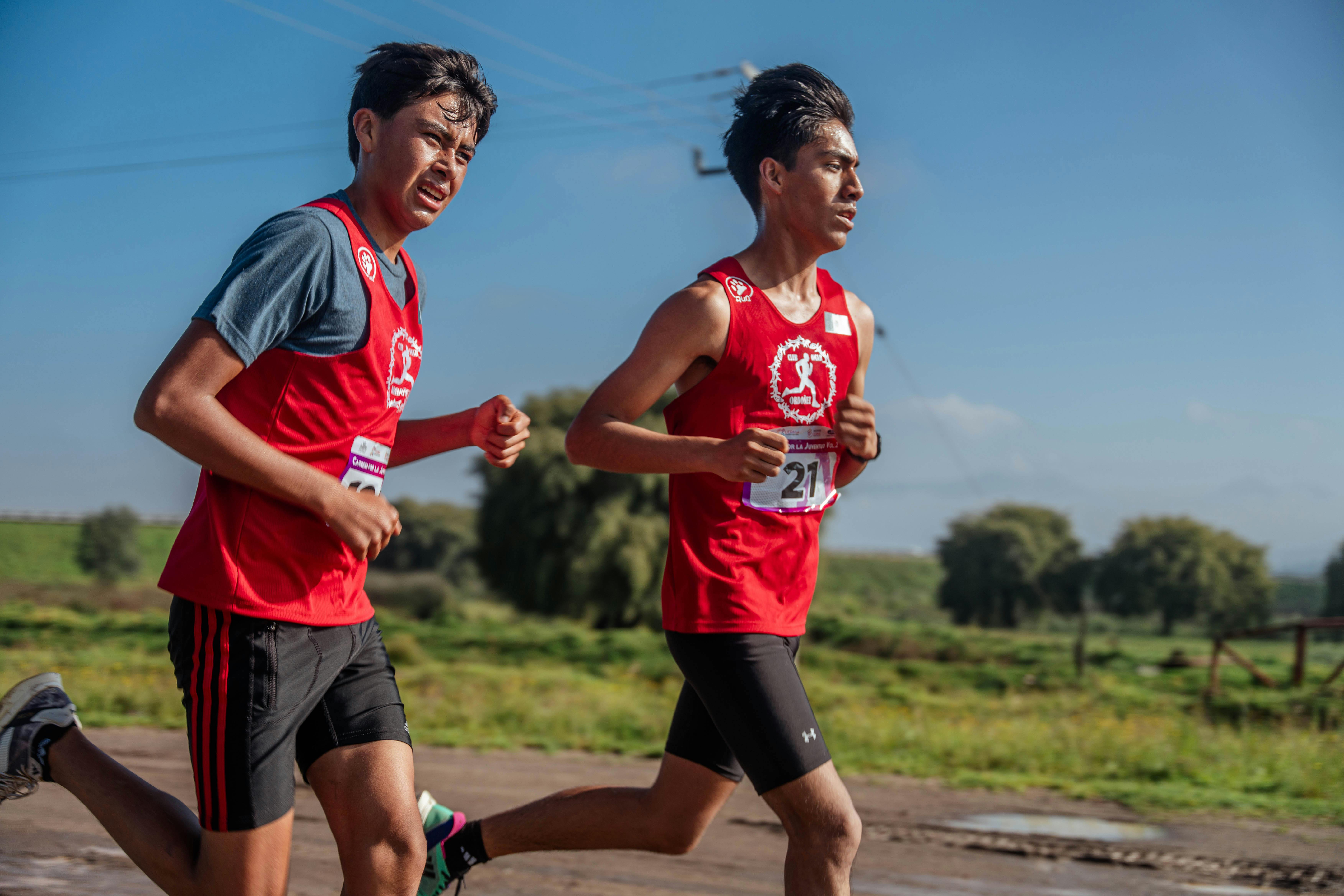
3. Improve Running Economy 🏃
Posture: Run tall with a slight forward lean from your ankles.
Cadence: Aim for ~170–190 steps per minute — shorter, quicker strides.
Arm swing: Move forward and back, not across your chest.
Why it matters: Efficient technique reduces wasted motion, meaning more speed for the same effort.
Drill: Fast feet — 20 meters of tiny, quick steps, then return to easy pace.
4. Use Interval Training ⚡
What to do: Mix short bursts of faster running with recovery jogs.
Example: 8 × 1 minute fast / 1 minute easy.
Why it matters: Intervals train both endurance and speed, teaching your body to handle intensity without fading.
5. Build Endurance Gradually 🧱
What to do: Add 5–10% to your weekly mileage. Include one “long run” at a relaxed pace.
Why it matters: A stronger aerobic base means less fatigue when you pick up speed.
6. Strength Training = Free Speed 💪
Focus on: Glutes, hamstrings, quads, calves, and core.
Try:
- Lunges
- Squats
- Planks
- Calf raises
Why it matters: Stronger muscles improve propulsion, posture, and stability — all crucial for faster running.
7. Fuel and Hydrate Right 🍌💧
Before: Eat a light carb snack (like a banana or toast) 1–2 hours before your run.
During: Sip water if running >30 minutes; add electrolytes if >60 minutes.
After: Replenish with carbs + protein (e.g., fruit + yogurt or a smoothie).
Why it matters: Running low on fuel or fluids is the fastest route to early fatigue.
8. Sleep and Recovery 💤
What to do: Aim for 7–9 hours of sleep. Stretch or foam roll after each run.
Why it matters: Muscles adapt and rebuild during rest — not while you’re running.
❌ Common Mistakes That Make You Tired Fast
- Starting every run too fast
- Ignoring form (slouching or overstriding)
- Skipping rest days
- Running hungry or dehydrated
💬 FAQ (Snippet Bait)
Why do I get tired so fast when running?
Most runners start too fast or pace poorly. It’s usually an energy management issue, not a fitness one.
How can I increase my stamina for running?
Add one weekly long run, practice intervals, and build mileage gradually.
What foods help me run longer?
Easy-digesting carbs like bananas, oats, or rice before — and balanced carbs + protein after.
🏁 Final Word
Running faster without getting tired is all about efficiency and strategy.
Fix your form, pace smart, build endurance, and fuel properly — and you’ll be amazed how long you can hold speed.
Think less “sprint and die” and more “cruise and fly.”
Written by the Perfect Running Form team — helping runners move smoother, faster, and injury-free.
Visit PerfectRunningForm.com →