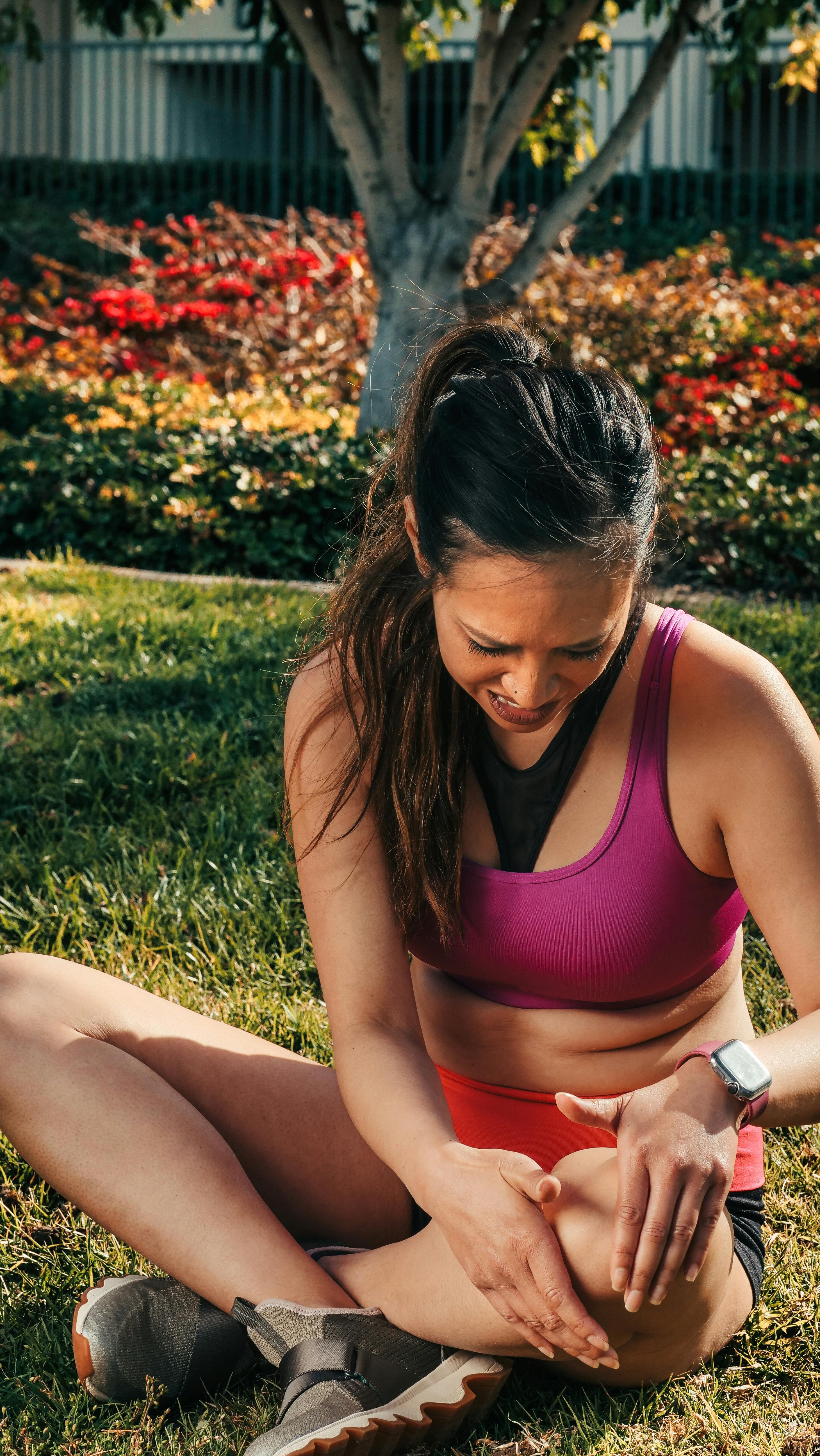
How to Avoid Knee Injury When Running: Expert Tips for Stronger, Pain-Free Runs
You lace up, feel good… and then your knees start complaining. The good news: knee pain is usually fixable. It’s rarely the knee’s fault alone—it’s training load and running mechanics.
This guide explains why knee pain happens, how to prevent it, and the exact drills and cues that protect your joints.
TL;DR (Quick Takeaways)
- Build gradually: increase weekly distance or intensity by 5–10% max.
- Run softer, not just stronger: shorter, quicker steps and a midfoot landing reduce knee load.
- Strength first: strong glutes, quads, calves, and core protect the knee.
- Surfaces matter: start on flat, even routes; add hills/uneven terrain later.
- Form check: upload a short run clip to Perfect Running Form for a personalized analysis + 2-week plan.
Why Runners Get Knee Pain
Most knee issues come from one (or both) of these:
- Training load problems
- Jumps in mileage, speed, hills, or frequency.
- Too little recovery between hard sessions.
- Form inefficiencies
- Overstriding: foot lands far ahead of your body (braking force → knee stress).
- Low cadence: long strides increase impact per step.
- Pelvic drop / knee collapsing inward: weak hip stabilizers.
- Upright or slouched posture: no forward lean from the ankles.
Think of the knee as a hinge: when hips (above) and ankles/feet (below) don’t do their job, the hinge takes the beating.
Fix Your Form: Simple Cues That Protect Knees
- Cadence: aim for ~170–190 steps/min (or +5–7% from your current).
- Foot placement: land under your hips, not in front.
- Posture: tall torso, slight forward lean from the ankles (not the waist).
- Quiet feet: soft, controlled midfoot landings; avoid heavy heel slaps.
- Arms: swing forward/back, not across; relaxed shoulders.
Strength That Prevents Knee Pain (2–3x/week)
ALL EXERCISE DEMOS AT THE BOTTOM OF THIS ARTICLE!
Glutes & Hips (stop the knee collapsing inward)
- Side-lying clamshells: 3×12–15/side
- Banded lateral walks (at ankles): 3×10–12 steps each way
- Single-leg hip bridge: 3×8–12/side
Quads (support the patellofemoral joint)
- Tempo split squats (3-second lower): 3×8–10/side
- Step-downs (20–25 cm step): 3×8–10/side (knee tracks over 2nd toe)
Calves (control loading, help shock absorption)
- Straight-knee calf raises: 3×12–15
- Bent-knee calf raises: 3×12–15
Core (steady trunk → steady knee)
- Side plank (knees or feet): 3×20–40s/side
- Dead bug (slow): 3×6–8/side
Progress by adding reps, tempo control, or light load. Quality first.
Run Training: Progress Without Overloading Knees
1) Follow a simple weekly structure (example, 3 days/week):
- Day A: Easy run (conversational) + 2–3 form drills
- Day B: Quality run (strides, short intervals, or gentle tempo)
- Day C: Long easy run (slow, steady)
2) Progress slowly:
- Total weekly distance: +5–10%.
- Long run: add 0.5–1.5 km (0.3–1.0 mi) per week.
- Hard days: 1–2 per week, never back-to-back.
3) Surfaces & shoes:
- Start on flat, even paths; introduce hills later.
- Replace shoes about 300–500 miles (480–800 km) or when midsole feels “dead”.
Form Drills (1–2 after the warm-up)
- A-march (20–30 m): tall posture, knee to hip height, foot under hips.
- A-skip (2×20–30 m): same pattern with light skip—rhythm and timing.
- Fast-feet (3×20 s): tiny, quick steps under your body; quiet landings.
- Wall lean run-in (3×15–20 s): lean from ankles, quick steps, drive back not up.
Keep volume low; focus on precision over fatigue.
Pacing & Breathing That Reduce Knee Load
- Run easy… truly easy: conversational pace on most days.
- Negative split: start a touch slower, finish a touch faster.
- Rhythmic breathing: e.g., inhale 3 steps, exhale 2 steps at easy pace.
When to Scale Back or Seek Help
- Pain that alters your form or worsens as you run.
- Sharp, localized pain, swelling, or night pain.
- No improvement after 2–3 weeks of reduced load + form/strength work.
If in doubt, pause and get a professional opinion.
Sample 10-Day Knee-Friendly Tune-Up
Day 1: Easy run 20–30 min + clamshells, step-downs, calf raises
Day 2: Rest or cross-train (bike/elliptical 20–30 min)
Day 3: Easy run 20–30 min + A-march, fast-feet + side planks
Day 4: Strength session (glute bridge, split squat, band walks, dead bug)
Day 5: Easy run 25–35 min, finish with 4×15 s relaxed strides
Day 6: Rest or walk 30 min
Day 7: Long easy run 30–45 min (flat surface)
Day 8: Rest or mobility (hips, calves, quads) 15–20 min
Day 9: Easy run 25–35 min + drills (A-skip, wall lean run-in)
Day 10: Strength session (progress from Day 4)
FAQs
Does running ruin your knees?
No. Recreational running is associated with lower knee osteoarthritis risk versus a sedentary lifestyle. Issues arise from spikes in load and poor mechanics, both of which are modifiable.
Should I stop running if my knees hurt?
If pain changes your form or sharpens as you go, stop, switch to low-impact work, and address load + mechanics. If it persists, get it checked.
What shoes help knee pain?
Comfort matters most. A shoe that lets you land softly under your body and keeps cadence up is usually knee-friendly. Replace worn pairs promptly.
Get a Personalized Form Report (Free)
If you want targeted fixes—not guesswork—upload a short run clip to Perfect Running Form. You’ll get:
- A personalized form breakdown (hip stability, cadence, foot strike, bounce).
- A 2-week running plan with exact form + strength exercises for your mechanics.
Run smarter. Save your knees.